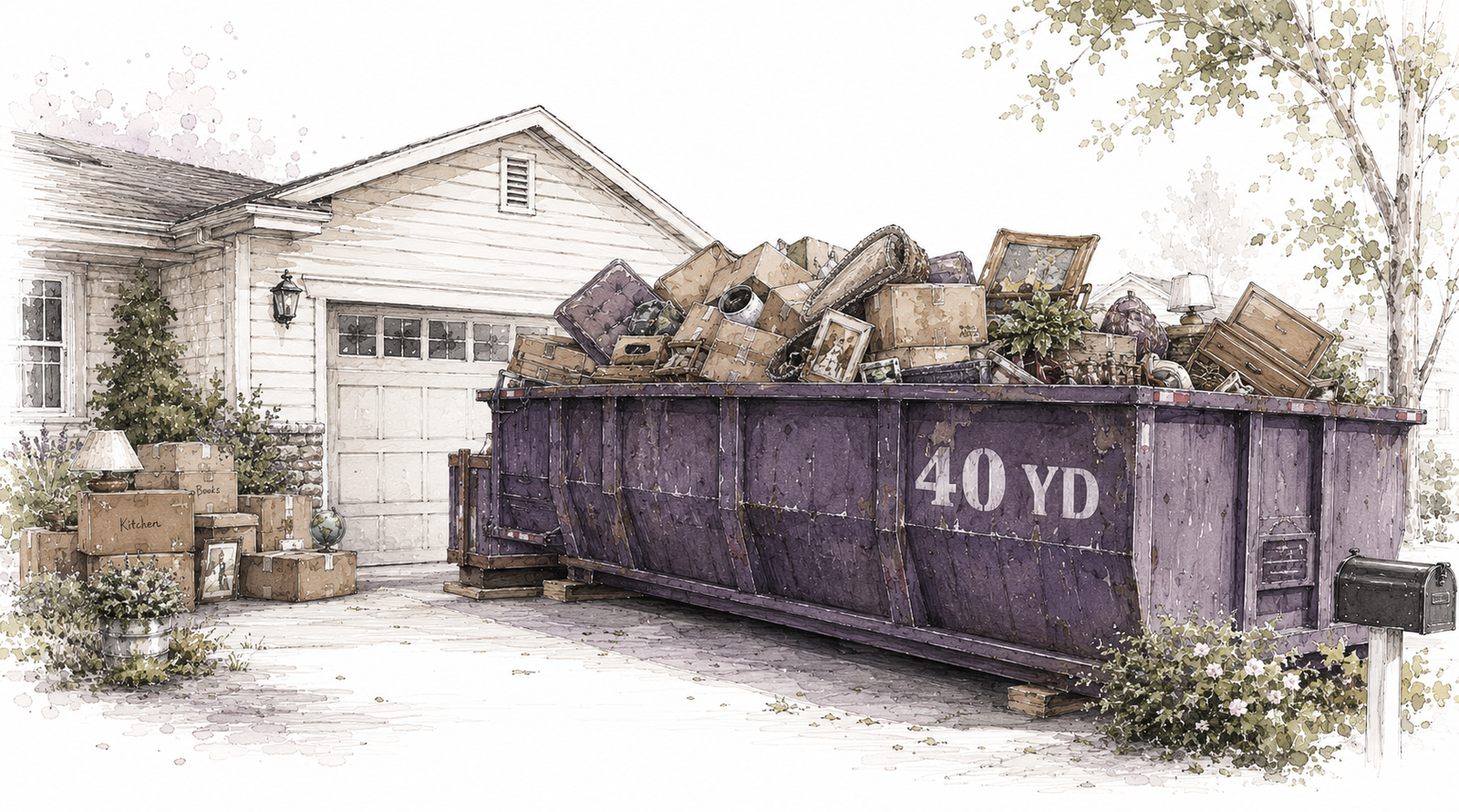
The dumpster was 40 yards. The stories that went with him were uncountable. Both were preventable.
I would like to tell you about my friend, Mr. D. I am using his initial out of respect for his privacy. The story is otherwise true, and I think about it more often than I expected to.
Mr. D was a quiet, kind, somewhat reclusive man. He was a cherished member of my partner’s spiritual community here in Boulder. He made pottery. He baked rather seriously — bread and cookies, the kind of baking that takes years to get right. He played music. He created art. He had served as a veteran. He had spent years as a mailman, which is the sort of job that gives a person decades of small daily observations about the people in a neighborhood. He saw quite a lot in his life, and he was the kind of person who noticed it.
We always met at our place, or somewhere else. Never at his. I knew, vaguely, that he was a private man. I did not know why.
I found out when he passed.
What I Walked Into
Mr. D lived alone. His closest family were two brothers in different states. When the news came, they flew in to handle the estate. By the time I arrived to help, a 40-yard dumpster had already been ordered and parked in his driveway. They had begun filling it.
His home was full. Not by a little. Full in the way that takes years of quiet accumulation, never noticed by anyone else because no one else was ever inside. Hundreds of cardboard boxes alone — most of them empty, kept just in case. I saved those from the landfill by hauling them to recycling. That was the easy part.
Then I started sorting through the dumpster, which is, in plain English, a very strange way to spend an afternoon.
Mr. D was loved by his community, and several friends had asked whether they could have a small keepsake to remember him. From the dumpster — and from what was still in the house — I pulled out items that mattered to those friends and very much would not have mattered to his brothers from out of state. Items he had used in his rituals. Pottery tools. Pottery pieces. Small handmade things that lived in our friends’ homes now, and that I still see when I visit.
Those objects went on to second lives. I am rather grateful for that.
A great deal more did not.
What Got Lost
The pottery and the tools and the rituals were the easy part to save, because they were physical. They could be carried out, given away, placed on shelves.
The harder loss was the part nobody could lift.
Mr. D was full of stories nobody had asked him for. The veteran’s stories. The mailman’s stories — and if you have ever talked to a postal carrier, you know they accumulate a particular kind of wisdom about how a neighborhood actually works. The baker’s stories about what changes when the dough sits for two days instead of one. The artist’s stories about why he kept making the same shapes and what they meant to him. The musician’s stories about the songs that arrived in his life at the right moment.
Most of those went with him.
I have a small handful, gathered second-hand from people who knew him better. But the firsthand record — the one that only Mr. D could have given — is gone. There is no recovering it.
What stayed with me, after all of it, was not the volume. It was what got lost.
The Honest Part Nobody Wants to Say
I think Mr. D did not invite people to his home because there was no room left to host them. The accumulation had quietly crowded out the version of his life where friends could come over for tea and a conversation. He had a lovely neighborhood. He could have walked friends through a kitchen, sat with them in a living room, shown somebody his pottery wheel. None of that was possible in the home as it stood.
The pile, in other words, was not just a physical problem. It was a social one. It had cost him company.
That is the part of these stories that nobody likes to say out loud. The stuff does not just take up space. It quietly shapes who you let into your life, and on what terms.
The Conversation That Could Have Happened
If I could rewind, here is what I would have done.
I would have sat down with Mr. D, two or three years before he passed, with a clear pot of tea and an honest few hours.
I would have walked his rooms with him, slowly. We would have used the Clutternomics™ lenses on the major categories — space cost, use, value, opportunity, legacy. We would have honored the pottery, the tools, the things that mattered. We would have released the empty boxes, the kept-just-in-case items, the inheritance of I might need that someday.
His home would have come back to him. He could have invited people over. He would have been less alone in his last years — which, looking back, may have been the deepest cost of all.
And — most importantly — I would have asked him for his stories. On video, or on audio, or just typed up over a couple of evenings. The mailman stories. The veteran stories. The baker’s stories. The artist’s. A short list of the books that shaped him. A few of his favorite recipes. The names of the people he carried in his heart.
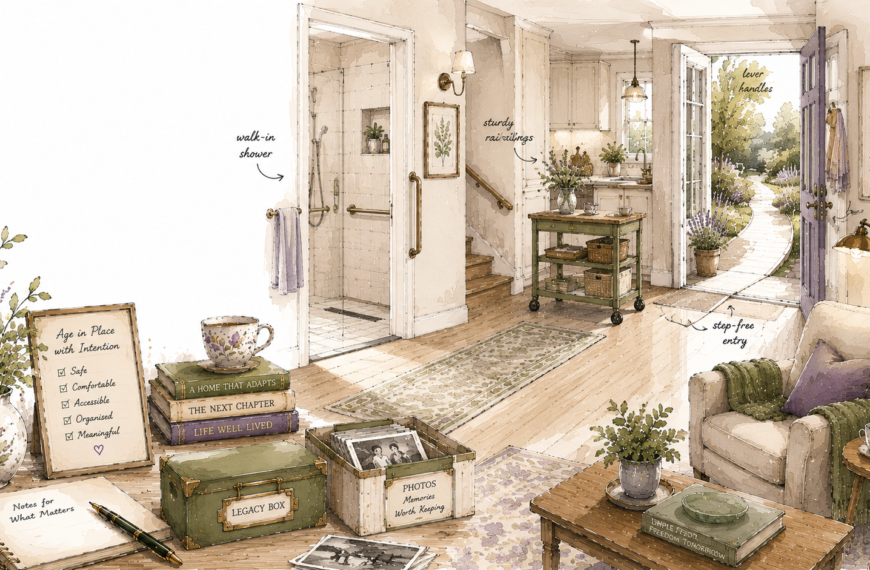
That work has a name on this site. I call it Legacy Creation. Some clients prefer the gentler framing: Next Life Chapter Preparations. Same idea, different name. The work is the same: keep what matters, capture the stories that go with it, make it findable for the people who outlive you.
We did not have that conversation. I think about it often.
Why I Am Telling You This
I am telling you this story because Mr. D is not unusual. Since his passing, I have walked into several other homes in similar shape. Each one had quietly arrived there over many years. None of the owners had set out to live that way.
If you are reading this, the question I would invite you to sit with — gently — is rather direct:
If somebody walked into your home tomorrow, somebody who loved you, would they know what mattered? Would they know which boxes to keep, which to release? Would they have your stories — the real ones, in your voice — or would they be guessing?
For most people, the honest answer is: they would be guessing.
The good news is that the work to fix this is rather smaller than people think. It is not a weekend purge. It is a few honest conversations, a few small decisions per week, and — eventually — a short list of items, stories, and instructions that any person you love could pick up and understand.
The work is what I do for a living now. But you can also do quite a bit of it on your own, this month, with no help from me at all.
A Few Small Moves, This Week
If Mr. D’s story landed with you, here are four small moves that genuinely change the picture — none of them dramatic.
- Build the Legacy Box. A clearly labeled box (physical or digital) with the essentials a loved one would need: passwords or password-manager access, will and estate documents, account information, keys, funeral wishes, advisor contacts. (More about this on the Smart Reduction™ page and the Legacy Creation page.)
- Build the Private Box. A clearly labeled box for items that mattered to you but are not meant to be passed on. Personal letters. Diaries. Private photographs. With instructions to release later.
- Record one story this month. Sit down with a phone, hit record, and tell one story you have never written down. Family origin, work life, the person who shaped you, the day that changed everything. Twenty minutes. No editing required.
- Ask one person for theirs. A parent, a friend, an uncle, a grandmother. Sit down with them. Hit record. Ask the questions you have been meaning to ask. Mr. D taught me that the right time to ask is much, much earlier than people expect.
These four moves are not the whole answer. They are the start of one. The full work — when somebody wants help — is what I do under the banners of Smart Reduction™ (the home and the things in it) and Legacy Creation (the stories, the meaning, what gets passed on).
A Final Thought
Mr. D was a very good man. He left more than a dumpster behind. He left pottery in our homes, music in our memories, and a quiet gap where the rest of his story should have been.
The pottery I can still hold. The story I can no longer ask for.
If you take one thing from this post: it is much, much easier to write down the story while the person who lived it is still around to tell it. That includes your own.
If You’d Like Help
If this story made you think of somebody — or of yourself — and you would like a calm, structured way to begin, Smart Reduction™ and Legacy Creation are exactly that work. As a coach, side-by-side, or by taking on more of the heavy lifting. Plain English, simple wording, no judgment.
A free 20-minute discovery call is all it takes to scope it.
Schedule a free discovery call.
A Secret SOZZ post — simple recipes for a better life. In memory of Mr. D.