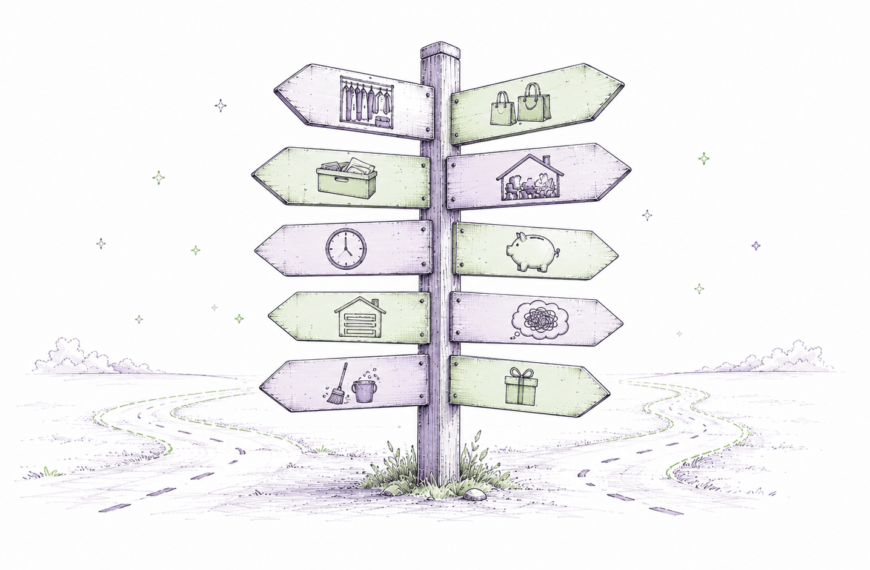
A new Smart Reduction™ sub-service. Built for Boulder, useful anywhere.
Most of us spend more time planning a vacation than planning how our home will support us later in life. That is rather backwards.
Surveys consistently show that 70 to 80 percent of older adults would prefer to stay in their homes as they age, rather than move into assisted living or institutional care. The wish is nearly universal. The preparation is almost entirely missing.
Here in Boulder — and across the Front Range — we have an aging community in an aging country. Many of the homes here were built or bought when the owners were in their forties and fifties. Stairs were fine. Tubs were fine. The garage was fine. None of those assumptions necessarily hold thirty years later.
I am introducing aging-in-place preparation as a sub-service within Smart Reduction™. The work is part architecture, part organization, part conversation, and part future-planning. It is much, much less dramatic than people expect, and quite a bit more useful than people realize.
The Honest Problem
Hospitals and rehab centers in this region have begun to flag a quiet crisis: they cannot discharge recovering patients safely because the patients’ homes are not ready for them. A surgery may have gone beautifully. The patient may be cleared medically. And then everyday architecture becomes the obstacle:
- Stairs without railings, or with railings only on one side
- Narrow bathroom doors
- Showers with a curb to step over
- Trip hazards in hallways and entrances
- A bedroom on the wrong floor
- Blocked pathways and inaccessible storage
- Poor lighting in the spots where it matters most
- A kitchen layout that requires balance on a wobbly stool
The problem is not just medical. It is architectural, organizational, and systemic. And most people wait until a crisis forces the conversation — at which point the choices are rushed, expensive, and made by somebody else.
What Aging in Place Actually Is
When most people hear aging in place, they picture hospital-style modifications. Grab bars. Stair lifts. Sterile accessibility equipment.
The best aging-in-place work is much more thoughtful and subtle than that.
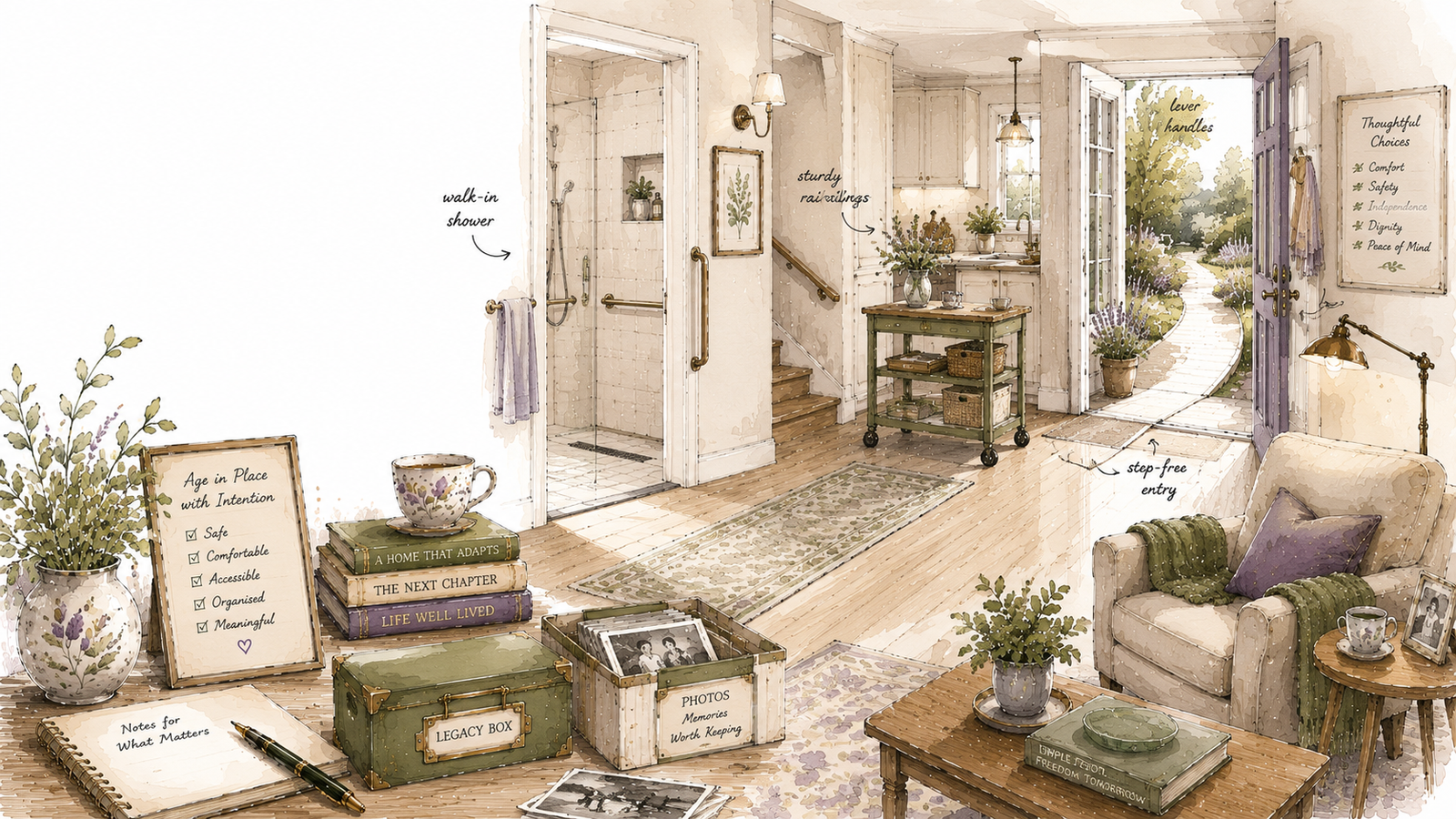
At its core, the work means creating a home that continues to support independence, mobility, dignity, safety, comfort, and quality of life through changing chapters. Done well, the same adjustments often make a home calmer and more functional for everybody who lives there — not just the older adult.
This is why I include the work inside Smart Reduction™. The goal is not just less stuff. The goal is less friction.
Why I Am the Right Guide for This Work
I have spent eight years as a property developer and builder in Colorado, including most of the past decade in Boulder and Denver. I have walked many homes — old, new, renovated, mid-renovation, and just-built. I know what is structurally easy to change, what is rather expensive to change, and what is much, much better left alone.
I am not a medical specialist. I am not an accessibility contractor. I do not sell stair lifts or grab bars. I do something different — I help you map your home honestly, prioritize the small improvements that matter most, and pair them with the Smart Reduction™ work that often makes the home work better long before any new fixture goes in.
In plain English, my job is to help you make calm, well-informed decisions about your home before urgency makes them for you.
The Hidden Cost of “Later”
The biggest mistake I see is the quiet assumption: we will deal with that later.
But later tends to arrive without warning. A fall. A surgery. A hospitalization. A new mobility issue. The loss of a spouse who handled half of what kept the house running. The slow accumulation of small physical limitations that quietly add up to a home that does not fit anymore.
At that point, decisions get rushed. Costs go up. Stress goes up. The number of people involved in the decisions — children, in-laws, doctors, social workers — goes up too. Nobody enjoys this stage.
The better approach is rather simple in concept: do the work earlier, in calmer conditions, with the person whose home it is fully in charge of the choices.
Thoughtful adjustments made early are usually less stressful, less expensive, less disruptive, and far more effective.
The First Step Is Usually Reduction
Before adding any accessibility feature, most homes first need simplification.
Excess belongings do more than create visual weight. They create obstacles, maintenance burdens, cleaning challenges, fall risks, difficult navigation paths, inaccessible storage, and ongoing decision fatigue.
This is where Smart Reduction™ and Clutternomics™ become especially valuable. Reducing unused furniture, duplicate items, storage overflow, and just in case accumulation can dramatically improve mobility, visibility, emergency access, and everyday function — often without spending a dollar on a contractor.
Sometimes the most powerful aging-in-place upgrade is simply reclaiming usable space. A hallway you can walk through without sidestepping. A bedroom you can close the door to. A garage you can park a car in, again.
The Categories Worth Reviewing
Every home and every situation is different. The following categories are what I walk through with clients. Few people need to do all of them. Most benefit from naming the top three.
Access and Mobility
Doorway widths (especially the bathroom). Stair railings on both sides. Chairlift-compatible stair geometry if it ever becomes relevant. Zero-threshold or low-threshold entries. Smoother transitions between rooms. Lever-style door handles instead of knobs. Frequently-used storage within easy reach.
Bathroom Safety
The single highest-risk room in most homes. Grab bars (the discreet design has improved a great deal). Walk-in or curbless showers. Shower seating. Handheld showerheads. Comfort-height toilets. Non-slip flooring. Improved lighting.
Kitchen Functionality
Aging-friendly kitchens are usually just more usable kitchens. Pull-out shelving. Better task lighting. Frequently-used items at waist height instead of on top shelves. Easy-to-grip hardware. Induction cooktops where gas is risky and unhealthy. Reorganized storage that respects the body that uses it now.
Lighting and Visibility
Brighter ambient lighting. Stair lighting. Motion-sensor lights in hallways and bathrooms. Illuminated pathways. Reduced glare. Easier-to-read controls and labels on appliances and thermostats.
Smart Home Support
Used thoughtfully, technology quietly extends independence. Smart thermostats. Medication reminders. Video doorbells. Voice assistants. Wellness-check cameras (when desired, not for surveillance’s own sake). Emergency response systems. The goal is support, not monitoring.
Maintenance Reduction
Many people underestimate how exhausting home maintenance becomes over time. Simplifying landscaping. Reducing the number of unused rooms that still need cleaning and heating. Minimizing hard-to-reach storage. Durable materials in high-use spots.
Emergency Preparedness
Often overlooked. Working smoke and CO detectors. Backup power for medical equipment if relevant. Medical information accessible to first responders. A lockbox with a key for trusted family or emergency services. Accessible exits. Simplified medication organization.
Social and Emotional Sustainability
One of the biggest aging-in-place risks is isolation. The home itself can either invite company or quietly discourage it. Spaces that welcome visitors. Comfortable gathering spots. Technology for staying in touch with family. Preserving the meaningful objects and stories that make a home still feel alive.
The Mr. D Lesson
I have written a longer post about my friend Mr. D, who passed a few years ago. The short version, relevant here:
Mr. D lived alone. His home had quietly filled up over decades — never noticed by anyone else, because no one was ever inside. When he passed, his brothers from out of state rented a 40-yard dumpster and began filling it.
The piece I think about most is this: Mr. D probably did not invite people to his home because there was no room left to host them. The accumulation had crowded out the version of his life where friends could come over for tea. He had a lovely neighborhood. None of it was usable as it stood.
That story is also an aging-in-place story. Mr. D’s home was not ready for company. It was also not ready for an emergency, a fall, or a recovering visitor. If you have not read it, the full post is here.
The point: a home that has not been prepared does not just fail you in the abstract. It fails you in the specific moments when you need it most.
A Quiet Thought Experiment
Here is a question I sometimes ask, gently, in discovery calls:
If you fell tomorrow afternoon — nothing dramatic, just a stumble in the kitchen — could you get back up? Could you reach a phone? Could a paramedic reach you without moving furniture? Could a recovering version of you, on crutches for six weeks, still get to the bathroom in the middle of the night?
For most people, the honest answer is not without help. The point is not to alarm anybody. The point is to notice — calmly — that some small adjustments could change all four answers.
Where This Meets Legacy Creation
Aging in place is not only about you. It is also about the home you leave behind.
A home that has been quietly prepared for the later chapters is also a home that is easier on the people who eventually have to manage it — whether that is in three months because of a recovery, or thirty years from now after a long full life. Fewer mystery boxes. Clearer paths. Documents that can be found. Important items that have been honored, named, and placed.
This is where the work overlaps naturally with Legacy Creation: preserving meaningful items, organizing important information, capturing stories, and making intentional decisions before others are forced to make them in a hurry.
The whole trifecta — Smart Reduction™, Digital Reset, and Legacy Creation — touches aging in place in different ways. Most clients who come in for this work end up touching all three.
Where to Start — Four Small Moves This Week
You do not have to solve everything. The best aging-in-place plans are gradual: one room, one system, one improvement at a time. Here are four small moves any reader can make this week, none of them requiring a contractor.
- Walk your home with one honest eye. Pretend a guest with a cane is arriving for dinner. Notice everything they would have to navigate. Write it down.
- Clear one hallway and one pathway. The hallway to the bathroom, or the path from the front door to the kitchen. Move anything that does not belong. Defend the clear path for a month.
- Improve lighting in one critical spot. The top of the stairs. The bathroom. The route from the bed to the toilet at 2 AM. A motion-sensor light is rather cheap and changes the math.
- Make sure somebody else can reach you. A spare key with a trusted neighbor or in a lockbox. Medical information accessible. A working phone where you spend most of your time.
These four moves are small. They are also the four that, in my experience, prevent the most regret.
The Goal Is Not Perfection
The best aging-in-place plans are gradual and practical. One room at a time. One system at a time. One improvement at a time.
The important thing is to start before urgency removes the options. A well-prepared home reduces stress, extends independence, and makes the later chapters quite a bit easier — for you, for your family, and for whoever ends up in the home next.
In many cases, it also creates a better home for the present. Which is rather the whole point.
If You’d Like Help
If a calm, structured walk-through of your home — or your parent’s home — sounds useful, aging in place preparation is now part of the Smart Reduction™ service set. I bring a builder’s eye, a systems thinker’s framework (Clutternomics™), and the same Coach / Partner / Executor flexibility as the rest of the work. Plain English, simple wording, no judgment.
A free 20-minute discovery call is all it takes to scope it.
Click here to schedule your call.
A Secret SOZZ post — simple recipes for a better life.